
Hair loss can feel deeply personal because it often affects how individuals perceive their confidence, identity, and overall sense of well-being. Whether thinning appears gradually or more noticeably over time, many patients seek solutions that support natural hair regrowth without relying on invasive procedures or long recovery periods.
Advances in regenerative medicine now provide options designed to stimulate the scalp environment using the body’s own biological components. PRP hair restoration has emerged as a widely recognized non-surgical hair restoration approach that focuses on revitalizing weakened hair follicles.
By using platelet-rich plasma derived from a patient’s own blood, this hair restoration treatment introduces growth factors that support follicle activity and improve scalp health. Patients exploring a hair growth treatment clinic often appreciate the ability to encourage natural regrowth through methods aligned with the body’s healing processes.
Keep reading to explore how PRP hair restoration works, why scalp health plays a vital role in hair regrowth therapy, and who may be a good candidate for this innovative approach to thinning hair treatment.

Why Hair Density Matters
Hair fullness contributes to overall appearance balance and personal confidence.
- Hair density may influence facial proportions. Balanced hair distribution helps frame the face and complement natural features. Thinning areas may draw attention away from facial harmony. We offer PRP hair restoration as part of our hair restoration treatment solutions.
- Hair texture contributes to aesthetic balance. Hair volume often supports overall symmetry between facial features. Reduced density may influence perceived proportions. Hair regrowth therapy supports improved scalp vitality.
- Healthy follicles support consistent growth cycles. Hair growth cycles depend on follicle strength and scalp circulation. Weakened follicles may produce thinner strands over time. Non-surgical hair restoration approaches support follicle function.
- Scalp health influences hair resilience. Healthy scalp tissue supports stronger strand formation. Reduced circulation may influence hair growth patterns. Hair growth treatment clinic options often focus on improving scalp conditions.
- Hair fullness contributes to confidence. Changes in hair density may influence how individuals perceive their appearance. Many patients seek thinning hair treatment options that promote natural results. PRP hair restoration encourages gradual improvement.
We offer PRP therapy as part of our hair restoration treatment services.
What Is PRP Hair Restoration?
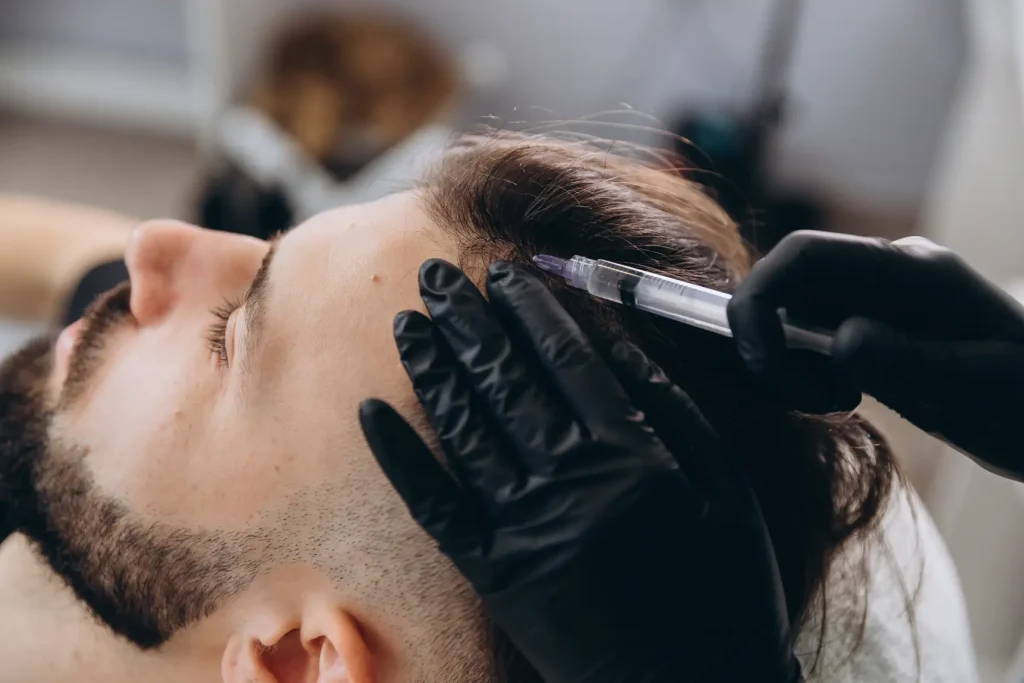
PRP hair restoration is a non-surgical hair restoration treatment designed to stimulate hair follicles using platelet-rich plasma derived from the patient’s own blood. The treatment begins with drawing a small blood sample, which is processed in a centrifuge to separate concentrated platelets rich in growth factors. These growth factors play a key role in tissue repair and cellular regeneration, supporting improved scalp health and follicle activity.
Once prepared, platelet-rich plasma is carefully injected into targeted areas of the scalp where thinning is present. The concentrated growth factors help stimulate dormant or weakened follicles, improve circulation, and extend the hair’s natural growth cycle. PRP hair restoration supports hair regrowth therapy by strengthening strands and encouraging improved density over time.
Hair restoration treatment options such as PRP therapy are often selected by patients seeking natural-looking improvement without surgical intervention. Many individuals searching for a hair loss treatment clinic appreciate that PRP therapy works with biological processes already present within the body.
Who Is a Good Candidate for PRP Hair Restoration?
Determining whether PRP hair restoration is the right choice often begins with understanding how individual hair loss patterns, lifestyle factors, and scalp health influence treatment outcomes.
Because this non-surgical hair restoration approach works by stimulating existing hair follicles, patients who still have active follicles, though weakened or dormant, often experience the most noticeable improvements in hair regrowth therapy over time.
1. Patients Experiencing Early Hair Thinning
PRP hair restoration is often most effective for individuals noticing early signs of thinning hair treatment needs. Early intervention allows growth factors to support follicles before significant miniaturization occurs. Hair regrowth therapy may help maintain existing density while encouraging stronger strands.
Early-stage thinning may respond well to regenerative support. Follicle stimulation encourages improved resilience. Preventative care supports consistent growth cycles.
2. Individuals Seeking Non-Surgical Solutions
Patients looking for non-invasive alternatives often explore PRP hair restoration as a minimally disruptive treatment option. Non-surgical hair restoration allows patients to return to daily activities quickly. Many appreciate avoiding lengthy recovery periods associated with surgical procedures.
Convenience contributes to treatment appeal. Minimally invasive approaches support comfort. Efficient sessions integrate easily into busy schedules.
3. Patients Experiencing Stress-Related Shedding
Stress-related hair changes may affect follicle activity and growth cycle timing. Hair regrowth therapy supports improved scalp environment conditions that encourage recovery. Supporting scalp vitality contributes to improved density over time.
Stress-related shedding may respond to supportive care strategies. Regenerative treatments encourage balanced growth cycles. Holistic approaches support overall wellness.
4. Individuals Noticing Gradual Hair Density Changes
Hair thinning may occur gradually due to genetic or hormonal factors. PRP hair restoration supports improved follicle performance by delivering growth factors directly to the scalp. Hair restoration treatment encourages gradual improvements aligned with natural growth patterns.
Gradual thinning may benefit from regenerative therapies. Improved follicle support contributes to density stability. Consistent care enhances results.
5. Patients Seeking Natural Treatment Approaches
PRP hair restoration uses biological components derived from the patient’s own blood. Many individuals prefer treatments aligned with natural regenerative processes. Hair growth treatment clinic options often emphasize compatibility with the body’s healing mechanisms.
Biological compatibility supports treatment safety. Natural processes encourage gradual improvement. Regenerative care aligns with holistic strategies.
6. Individuals Interested in Long-Term Hair Vitality
Hair regrowth therapy often focuses on maintaining follicle health over time. Consistent treatment sessions may support ongoing improvements in hair thickness and resilience. Long-term care strategies contribute to stable outcomes.
Long-term approaches promote sustained vitality. Ongoing support enhances follicle performance. Maintenance care encourages consistency.
7. Patients Experiencing Hormonal Hair Changes
Hormonal fluctuations may influence follicle activity and growth cycles. Thinning hair treatment options such as PRP therapy support scalp health and hair regrowth. Regenerative treatments help address changes influenced by hormonal shifts.
Hormonal changes may affect hair density patterns. Regenerative support encourages improved resilience. A balanced scalp environment supports growth.
8. Individuals Looking to Complement Other Treatments
PRP hair restoration may complement broader wellness strategies that support scalp health and overall vitality. Combined approaches often enhance treatment outcomes. Hair restoration treatment integrates well into holistic care plans.
Complementary strategies support consistent progress. Integrated care promotes balanced results. Holistic approaches enhance long-term outcomes.
Confidence Through Regrowth
Hair restoration treatment options continue to evolve, offering patients more choices than ever before when addressing thinning hair concerns. PRP hair restoration provides a non-surgical hair restoration approach designed to support follicle activity, improve scalp conditions, and encourage gradual hair regrowth therapy aligned with natural biological processes.
Patients exploring a hair growth treatment clinic often value treatments that promote subtle yet meaningful improvement without requiring extensive downtime. By supporting scalp health and hair regrowth through platelet-rich plasma, individuals may experience improved density and stronger strands over time.
Aqua Aesthetics & Wellness in Lansing, MI, offers PRP hair restoration as part of a comprehensive approach to thinning hair treatment, helping patients explore solutions designed to support confidence, scalp vitality, and natural-looking hair restoration results.
Connect with us today to schedule your appointment
